
Understanding Serverless Architecture for Small Businesses
Small businesses are always looking for ways to run their websites and applications efficiently while keeping costs low. One technology making this easier than ever is serverless architecture. Although the name suggests “no servers,” serverless doesn’t get rid of servers—it simply removes the need for business owners to manage them.
In this article, we break down what serverless architecture really means, why it matters, and how hosting providers like JumboNIC help small businesses take advantage of this powerful modern technology.
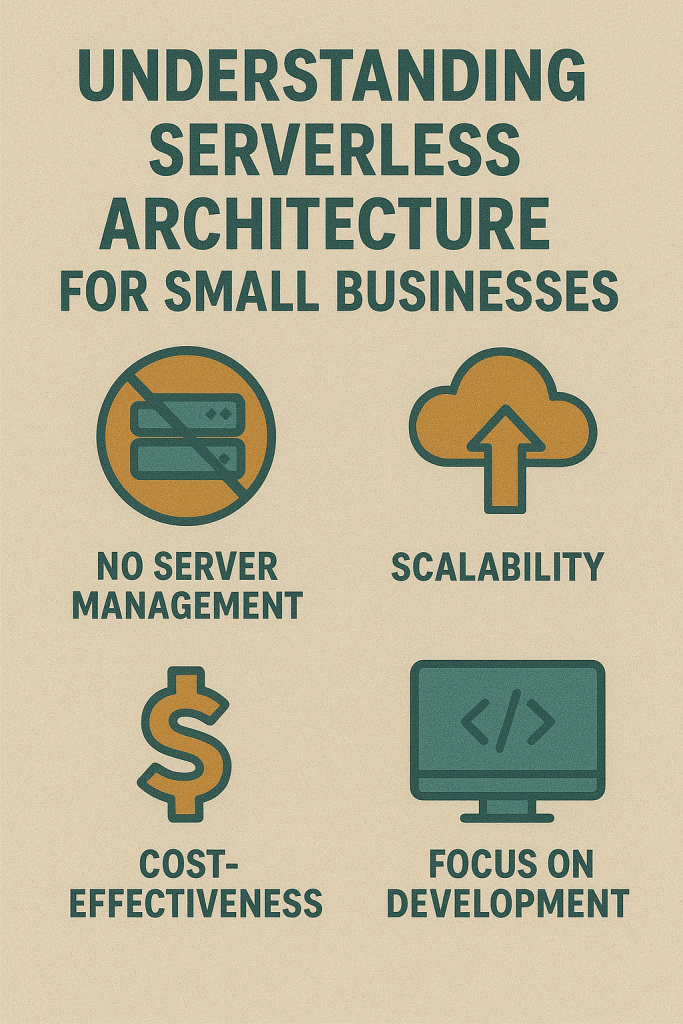
What Is Serverless Architecture?
Serverless architecture is a cloud-based model where applications run on-demand without requiring users to manage server hardware, configurations, or infrastructure.
Instead of renting or maintaining a server, your app runs automatically whenever needed.
Key Characteristics of Serverless
No server setup or maintenance
Pay only for actual usage
Automatic scaling
Faster deployment
Hands-off infrastructure
In simple terms: you focus on your business, and the serverless hosting platform handles everything else.
How Serverless Works (Without the Technical Confusion)
With traditional hosting, your site or app sits on a server that’s always running.
With serverless, your hosting platform runs your code only when a visitor or user triggers it.
For example:
Someone visits your online store → serverless function processes checkout
A customer signs up for your newsletter → serverless function stores their data
Your app receives a request → serverless computes and responds instantly
There’s no idle server time, no wasted cost, and no hardware limits.
Why Serverless Is Ideal for Small Businesses
Small businesses often struggle with:
Limited budgets
Variable traffic
Unpredictable growth
Lack of technical staff
Serverless solves these challenges with ease.
1. Lower Costs — Pay for What You Use
No paying for unused resources or oversized servers.
Serverless hosting bills only when code is executed, making it perfect for businesses with:
Seasonal sales
New websites
Low-to-medium traffic
2. Automatic Scaling
Whether you have:
20 visitors
2,000 visitors
200,000 visitors
Serverless architecture scales instantly, with no downtime.
3. Zero Server Maintenance
No updates.
No patches.
No hardware failures.
No system administration.
The serverless provider handles all of this.
4. Faster Development and Deployment
Developers can:
Push new features quickly
Deploy apps or APIs instantly
Focus purely on functionality, not infrastructure
5. Better Reliability
Because serverless runs on distributed cloud nodes, apps experience:
Higher uptime
Automatic failover
Faster response times
Serverless Use Cases for Small Businesses
Serverless isn’t just for tech companies—every small business can benefit.
Examples Include:
E-commerce functions (cart, payments, search)
Automated email responses
Customer portals
Appointment scheduling
Lead form processing
Analytics and reporting
Content delivery and image optimization
Chatbots and AI tools
With serverless, even non-technical businesses can run modern apps without hiring a full tech team.
How JumboNIC Supports Serverless Technology
Modern hosting providers play a critical role in making serverless accessible. JumboNIC offers infrastructure and tools that make it easy for small businesses to adopt serverless architecture.
JumboNIC Features Supporting Serverless Workflows
Cloud-based CDN with edge computing for instant function execution
AI-powered scaling to handle traffic spikes
Automated backups and security updates
Developer tools and API integrations
Support for microservices and function-based deployments
High-speed NVMe SSD infrastructure
Whether you want to build a simple form handler or a full application backend, JumboNIC provides the speed, scalability, and reliability serverless demands.
Serverless vs Traditional Hosting: Which Is Better for Small Businesses?
Both have strengths. Here’s a quick comparison:
| Feature | Serverless | Traditional Hosting |
|---|---|---|
| Scaling | Automatic | Manual or limited |
| Cost | Pay-per-use | Fixed monthly fee |
| Maintenance | None | Required |
| Performance | Extremely fast | Varies by server load |
| Complexity | Low | Can be high |
| Best for | Apps with variable traffic | Constant workloads, large CMS sites |
Best Approach? Hybrid Hosting
Small businesses often benefit from using:
Traditional hosting for WordPress/website
Serverless functions for dynamic tasks (forms, APIs, automation)
JumboNIC supports both models for maximum flexibility.
Is Serverless Right for Your Small Business?
Serverless architecture is ideal if you want:
Lower hosting costs
Zero maintenance
Automatic scaling
Faster development
Modern, flexible infrastructure
If you run a small business and want a hosting environment that grows seamlessly with you, serverless is a smart future-ready choice.
Conclusion
Serverless architecture is transforming the way small businesses build and deploy digital experiences. By eliminating the need for manual server management and offering performance that scales automatically, serverless helps businesses stay agile, efficient, and competitive.
With providers like JumboNIC, small businesses can tap into powerful serverless tools—without complexity or high costs. The future of hosting is simpler, faster, and more automated than ever.