
How Website Downtime Affects Sales and Brand Reputation
For modern businesses, a website isn’t just a digital presence—it’s a critical sales and marketing platform. Even a few minutes of downtime can cost revenue, damage customer trust, and impact your brand’s reputation.
In this guide, we’ll explore how website downtime affects sales and brand perception, and how JumboNIC hosting helps minimize interruptions while keeping your site fast, secure, and reliable.
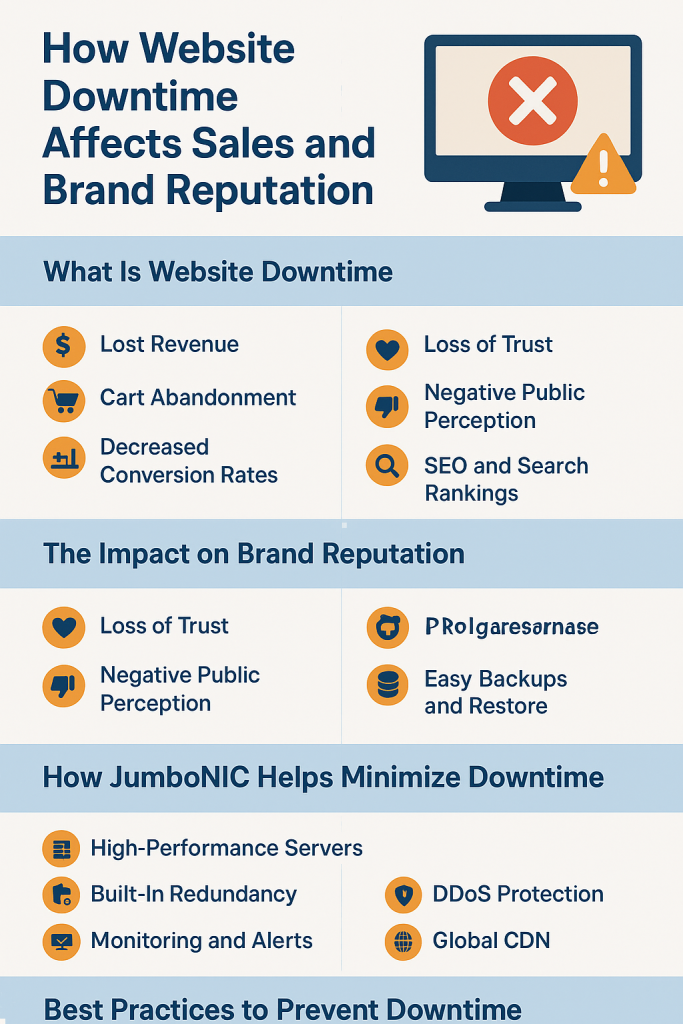
What Is Website Downtime?
Website downtime occurs when your website is unavailable to visitors. This could be due to:
Server outages
DDoS attacks or cyberattacks
Plugin or theme conflicts
DNS issues
Maintenance without proper redirects
Downtime can be partial (some pages fail to load) or complete (entire website inaccessible).
The Cost of Downtime on Sales
1. Lost Revenue
E-commerce sites lose direct sales with every minute offline.
Even informational sites miss opportunities to capture leads or subscriptions.
Example: A store earning $1,000/day loses roughly $41/hour during downtime.
2. Cart Abandonment
Shoppers expect seamless experiences.
Slow or unavailable pages increase cart abandonment rates.
3. Decreased Conversion Rates
Users are less likely to trust a site that’s frequently down.
Repeat visitors may turn to competitors.
The Impact on Brand Reputation
1. Loss of Trust
Frequent downtime signals unreliability.
Customers may question your professionalism and commitment to service.
2. Negative Public Perception
Social media complaints can spread quickly.
Reviews or forums may reflect downtime incidents, impacting future prospects.
3. SEO and Search Rankings
Google tracks site availability.
Frequent or prolonged downtime can negatively affect search engine rankings, reducing organic traffic.
How JumboNIC Helps Minimize Downtime
Reliable hosting is the first line of defense against website interruptions. JumboNIC hosting provides:
1. High-Performance Servers
NVMe SSD storage for fast database and page responses
Optimized infrastructure for WordPress, WooCommerce, and other platforms
2. Built-In Redundancy
Multiple server layers reduce the risk of total failure
Automatic failover ensures continued uptime
3. DDoS Protection
JumboNIC protects your site against malicious traffic that can cause downtime
4. Monitoring and Alerts
Real-time monitoring detects outages immediately
Alerts allow fast action before downtime affects customers
5. Easy Backups and Restore
Daily automated backups allow rapid recovery in case of server or software failure
6. Global CDN
Content Delivery Network ensures pages load even if one server node faces issues
Best Practices to Prevent Downtime
Regular Updates – Keep WordPress, plugins, and themes current.
Use Reliable Hosting – JumboNIC’s hosting ensures stability and speed.
Monitor Site Health – Use uptime monitoring tools to detect problems early.
Implement Redundancy – Use CDNs and failover mechanisms.
Plan Maintenance Windows – Notify users and perform updates during off-peak hours.
Secure Your Site – Protect against malware and attacks with firewalls and security plugins.
Conclusion
Website downtime isn’t just an inconvenience—it directly impacts sales, conversion rates, and brand reputation. Even a few minutes offline can erode customer trust and cost revenue.
By combining:
✔ Reliable hosting from JumboNIC
✔ DDoS protection and global CDN
✔ Automated backups and monitoring
✔ Proactive maintenance and updates
…you can minimize downtime, maintain a strong online presence, and protect both your revenue and your brand image.