
Edge Computing vs Cloud Hosting: What’s the Difference?
As businesses strive for faster websites, lower latency, and more resilient infrastructure, two technologies dominate the conversation: cloud hosting and edge computing. While both are powerful, they serve different purposes—and understanding the difference is essential for choosing the best setup for your website or application.
In this article, we break down edge computing vs cloud hosting, how each works, their benefits, and how modern hosting providers like JumboNIC combine both to deliver next-generation performance.
What Is Cloud Hosting?
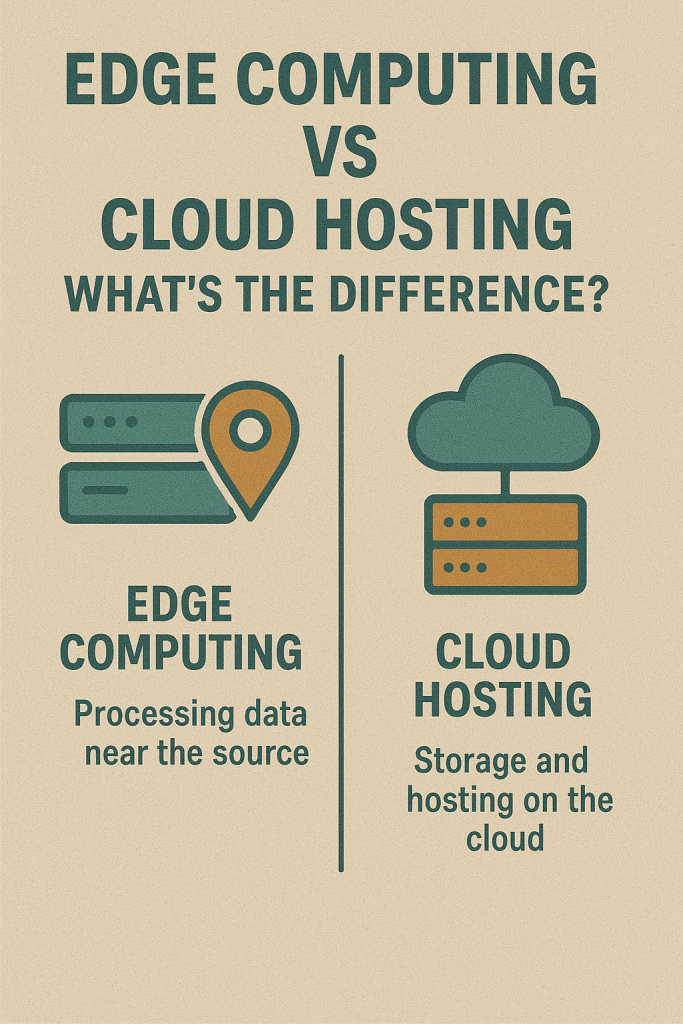
Cloud hosting distributes your website or application across multiple interconnected servers. Instead of relying on a single physical machine, your site uses a global network of virtualized resources.
Key Features of Cloud Hosting
Centralized data processing
Flexible, on-demand resource scaling
Redundant server infrastructure
High uptime and reliability
Pay-for-what-you-use resource management
Cloud hosting is ideal for:
Medium to large websites
E-commerce stores
SaaS platforms
Sites with unpredictable traffic
JumboNIC’s cloud hosting uses scalable NVMe SSD infrastructure, smart resource allocation, and built-in redundancy for consistent performance.
What Is Edge Computing?
Edge computing moves data processing closer to users by running workloads on servers located at the “edge” of the network—near major population hubs.
Instead of routing everything through central data centers, edge nodes process data locally, drastically reducing latency.
Key Features of Edge Computing
Extremely low latency
Localized data processing
Faster content delivery
Improved performance for mobile and IoT devices
Reduced server load on central systems
Edge computing is ideal for:
Real-time applications
High-traffic global sites
Mobile-heavy audiences
IoT and smart devices
Websites targeting multiple regions
JumboNIC’s edge-powered CDN accelerates websites worldwide by caching and delivering assets through distributed nodes.
Cloud Hosting vs Edge Computing: What’s the Difference?
Below is a simple comparison to highlight how each technology works.
| Feature | Cloud Hosting | Edge Computing |
|---|---|---|
| Where data is processed | Centralized data centers | Local edge servers near users |
| Primary benefit | Scalability | Ultra-low latency |
| Best for | Dynamic apps, CMS, e-commerce | Real-time apps, global audiences |
| Latency | Moderate | Very low |
| Redundancy | High | Medium to high |
| Use cases | Hosting, databases, backups | CDN, caching, IoT, real-time interactions |
Which One Is Faster?
Both can improve performance, but in different ways:
Cloud hosting improves speed by:
✔ Using powerful hardware
✔ Scaling automatically
✔ Reducing downtime
Edge computing improves speed by:
✔ Bringing content physically closer to users
✔ Reducing network travel time
✔ Enhancing global responsiveness
The fastest websites use both—cloud for core hosting, edge for global delivery.
How JumboNIC Combines Cloud + Edge
Modern websites need the power of cloud architecture and the low latency of edge networks.
JumboNIC integrates both technologies by offering:
1. Cloud-Based Hosting
Ultra-fast NVMe SSD storage
Scalable resources
Automatic failover
Self-healing infrastructure
2. Edge-Accelerated CDN
Distributed nodes around the world
HTTP/3 and QUIC support for lower latency
Smart caching for optimal performance
AI-powered routing to the fastest edge server
Together, these create an environment optimized for:
Speed
Security
Uptime
Global reach
When to Choose Cloud Hosting
Cloud hosting is best for websites that need:
Dynamic content processing
Flexible storage and memory
Centralized databases
Heavy backend workloads
If you run:
A WooCommerce store
A membership site
A SaaS dashboard
A news portal
Cloud hosting (like JumboNIC’s scalable plans) is the right foundation.
When to Choose Edge Computing
Edge computing is essential when you need:
Fast delivery of static assets
Global acceleration
Real-time interactions
Better mobile performance
If you target a distributed audience or need instant load times worldwide, edge computing becomes crucial.
The Best Solution: A Hybrid Approach
Today’s fastest websites use cloud hosting for data + edge computing for delivery.
This hybrid model gives you:
Centralized power
Global speed
High uptime
Lower server load
Better SEO performance
Reduced bounce rates
JumboNIC’s hybrid cloud-edge infrastructure is designed specifically for businesses that want the best of both worlds.
Conclusion
Both cloud hosting and edge computing are essential technologies shaping the future of the web. While cloud hosting provides scalability and reliability, edge computing delivers unmatched global speed and low latency.
With providers like JumboNIC, businesses no longer have to choose—because the hosting platform integrates both, ensuring websites stay fast, secure, and available for users everywhere.
Whether you run an online store, a growing business, or a high-traffic application, understanding these two hosting technologies will help you choose the setup that delivers the best performance today and in the future.