
Data Sovereignty: Why Server Location Matters for Compliance
In a world where data breaches, privacy laws, and cross-border regulations are evolving rapidly, data sovereignty has become a critical concern for businesses of all sizes. More than ever, organizations must understand where their data is stored, who controls it, and which laws apply to it.
This is why server location is no longer just a technical detail—it’s a compliance requirement.
In this article, we explore what data sovereignty means, why businesses must pay attention to hosting location, and how providers like JumboNIC help you stay legally compliant while maintaining top-tier performance.
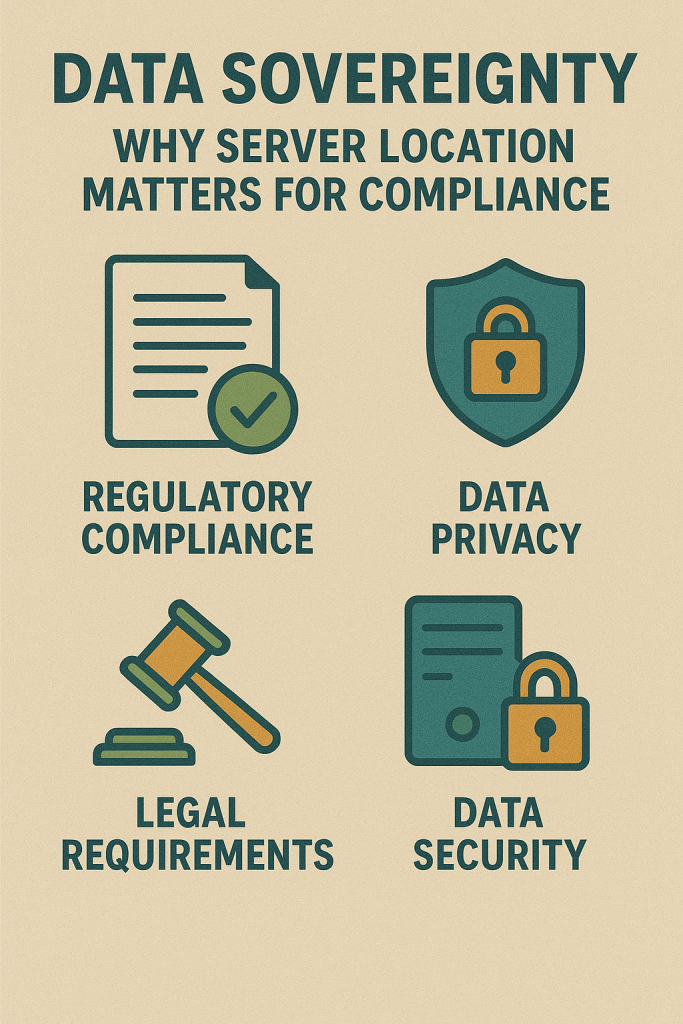
1. What Is Data Sovereignty?
Data sovereignty refers to the legal concept that digital information is subject to the laws of the country where it is stored.
This means:
If your server is in Germany, German and EU privacy laws apply.
If your server is in the U.S., U.S. data regulations apply.
If your server is in Singapore, Singaporean law governs it.
Your business may operate globally, but your hosting location determines your legal responsibilities.
2. Why Data Sovereignty Matters More Than Ever
With the rise of cloud computing and global hosting providers, data often crosses borders without businesses realizing it.
However, governments have introduced strict regulations such as:
GDPR (Europe)
CCPA/CPRA (California)
PDPA (Singapore)
LGPD (Brazil)
PIPEDA (Canada)
Data Residency Laws (Various regions)
Failing to comply can lead to:
Heavy fines
Legal disputes
Loss of customer trust
Mandatory audits
Operational disruptions
Proper data sovereignty ensures businesses stay compliant and reduce regulatory risks.
3. How Server Location Impacts Compliance
Your hosting location affects several critical areas:
✔ 1. Privacy Regulations
Different countries have different rules about:
Data collection
Data retention
Data access
Government surveillance
User consent
Data processing
Choosing the wrong hosting region may automatically create compliance violations.
✔ 2. Government Access and Jurisdiction
Some countries allow:
Secret subpoenas
Data seizure
National security requests
Mandatory data sharing
Understanding where your data resides means understanding who has rights over it.
✔ 3. Cross-Border Data Transfers
Many privacy laws restrict moving data across borders without:
Special contracts
Encryption rules
User permissions
Approved transfer mechanisms
Hosting data locally can eliminate these complications.
✔ 4. Client and Industry Requirements
Some industries require local data storage:
Finance
Healthcare
Government
Education
E-commerce
Many enterprise clients also demand proof of data residency as part of vendor onboarding.
4. The Business Benefits of Local Hosting
Choosing the right hosting location is not just about compliance—it also impacts performance and user experience.
🚀 Faster Load Times
Data travels faster over shorter distances.
Hosting near your primary audience means:
Reduced latency
Better performance
Higher engagement
Stronger SEO
🔒 Stronger Security
Local hosting can provide:
Greater data control
Local cyber protection laws
Region-specific monitoring
🤝 Increased Customer Trust
Customers want assurance that their data is:
Protected
Stored responsibly
Managed under strict privacy rules
Data sovereignty directly supports stronger brand credibility.
5. How JumboNIC Helps Businesses Achieve Data Sovereignty
JumboNIC provides a modern, compliance-friendly hosting environment built for international businesses. Their platform supports data sovereignty through:
🌍 Strategic Global Data Center Locations
JumboNIC allows users to select hosting regions that align with:
GDPR
CCPA
Local data residency requirements
Industry standards
This ensures full compliance with regional regulations.
🔐 Advanced Security & Encryption
JumboNIC protects data with:
End-to-end encryption
Hardened server environments
Localized backup options
Built-in privacy features
Your data stays secure and compliant, wherever it’s hosted.
📘 Transparent Data Policies
Unlike many low-cost hosts, JumboNIC provides clarity on:
Where data is stored
How data is processed
Who has access
Compliance obligations
Transparency is essential for legal trust and audit readiness.
⚙️ Performance With Compliance
JumboNIC ensures businesses do not have to choose between:
Fast servers
Local hosting
Legal compliance
You get all three—optimized for speed and regulatory alignment.
6. How to Choose the Correct Hosting Location
Here’s a simple checklist for selecting a data center region:
✔ Where are your customers located?
Hosting closer improves performance.
✔ Which privacy laws apply to you?
Check local and international regulations.
✔ Does your industry require regional storage?
Some sectors legally mandate it.
✔ Do you process sensitive information?
Health, finance, and government data often require strict data residency.
✔ Do your clients require proof of data location?
Enterprises commonly request this during contract negotiations.
Conclusion: Server Location Is Now a Legal Necessity, Not a Technical Detail
Data sovereignty has transformed the hosting landscape. Businesses must now think strategically about where their data lives and which laws govern it.
Choosing a compliant hosting provider like JumboNIC ensures:
Localized data storage
Stronger security
Legal compliance
Faster website performance
Greater customer trust
In a world with expanding digital regulations, server location matters more than ever—and businesses that understand this will be better equipped to thrive.