
Website Accessibility: Why It’s Good for Business and SEO
In today’s digital-first world, website accessibility is no longer optional—it’s essential. Accessibility ensures that all users, including those with disabilities, can navigate and interact with your website. Beyond legal and ethical considerations, accessible websites provide significant business and SEO benefits.
This guide explores why website accessibility matters, how it impacts your business, and how JumboNIC hosting can support a fast, secure, and accessible website.
What Is Website Accessibility?
Website accessibility refers to designing and developing websites so that everyone, including people with disabilities, can use them. This includes individuals with:
Visual impairments (blindness or low vision)
Hearing impairments
Motor disabilities
Cognitive or learning disabilities
Accessible websites use clear navigation, readable fonts, descriptive alt text, captions for media, and keyboard-friendly layouts to ensure inclusivity.
Why Accessibility Is Good for Business
1. Expands Your Audience
Approximately 15% of the global population lives with some form of disability.
Accessible websites reach more potential customers and increase engagement.
2. Enhances Brand Reputation
Demonstrating commitment to inclusivity builds trust and loyalty.
Customers are more likely to support brands that are socially responsible.
3. Increases Conversions
Accessibility features like clear navigation, readable text, and simple forms improve user experience for everyone, reducing bounce rates and boosting conversions.
4. Reduces Legal Risks
Many countries have regulations requiring digital accessibility (e.g., ADA in the U.S., EN 301 549 in the EU).
Ensuring accessibility can prevent lawsuits and compliance issues.
How Accessibility Improves SEO
Accessibility and SEO share many best practices:
Alt text for images → Helps screen readers and improves image search rankings
Descriptive headings and semantic HTML → Enhances crawlability for search engines
Keyboard-friendly navigation → Improves site usability and user engagement metrics
Readable URLs and structured data → Benefits both SEO and accessibility tools
By following accessibility guidelines, your site becomes more search-engine-friendly, improving organic traffic.
Key Accessibility Practices for Your Website
Use Alt Text for Images
Describe images clearly for screen readers.
JumboNIC hosting ensures fast image delivery without compromising accessibility.
Ensure Keyboard Navigation
Users should navigate your site using only the keyboard.
Test forms, menus, and buttons for keyboard accessibility.
Add Captions and Transcripts for Media
Videos should include captions, and audio should have transcripts.
Helps both users with hearing impairments and search engines index content.
Maintain High Contrast and Readable Fonts
Text should be easy to read for visually impaired users.
Use sufficient contrast between text and background.
Use ARIA Landmarks and Semantic HTML
Helps screen readers interpret site structure and content.
Improves both accessibility and SEO performance.
Test with Accessibility Tools
Use tools like WAVE, axe, or Lighthouse to audit your site.
JumboNIC’s staging environment allows safe testing before going live.
How JumboNIC Supports Accessible Websites
JumboNIC hosting provides the infrastructure and tools to maintain fast, secure, and accessible websites:
High-performance NVMe SSD hosting → Reduces page load times, critical for accessibility and SEO.
Global CDN & HTTP/3 → Ensures content is delivered quickly worldwide.
Staging environments → Test accessibility improvements safely before deploying.
SSL & security tools → Protect all users, including those with disabilities, from cyber threats.
Reliable uptime → Ensures your accessible site is always available to users.
Conclusion
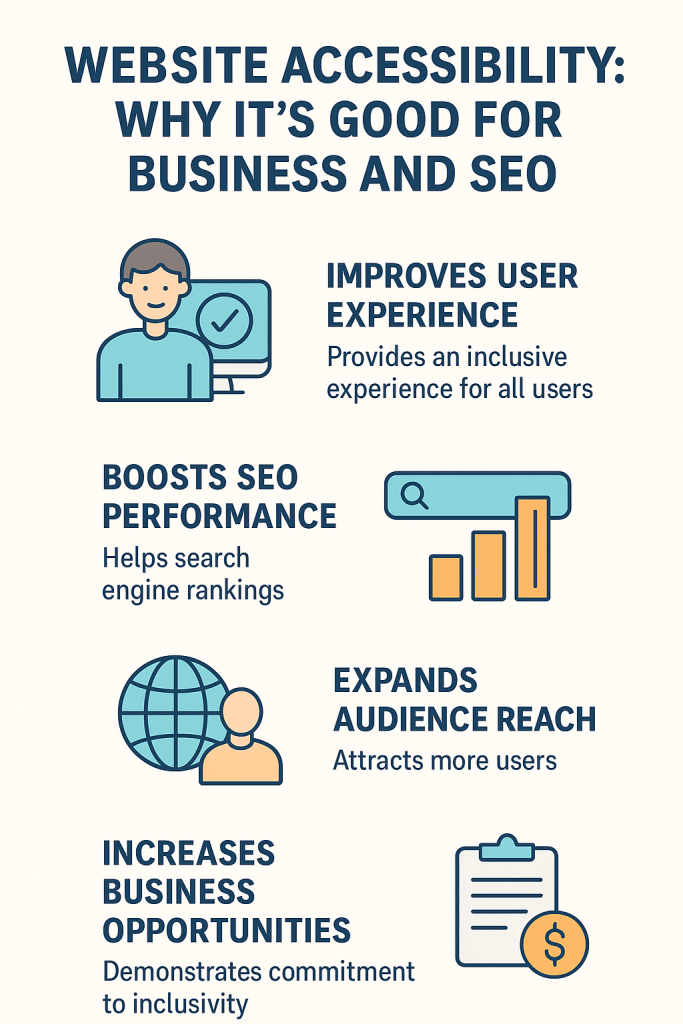
Website accessibility is a win-win for businesses: it enhances user experience, boosts SEO, builds brand trust, and expands your audience. Ignoring accessibility not only limits your reach but can also pose legal and reputational risks.
By implementing accessibility best practices and leveraging JumboNIC hosting for performance, security, and reliability, your website can be inclusive, search-engine-friendly, and optimized for business growth.