
🗓️ Content Planning: How to Build an SEO-Friendly Blog Calendar
Featuring JumboNIC
Creating content without a plan is like throwing darts blindfolded — you might hit something, but results are random.
An SEO-friendly blog calendar helps you publish consistent, optimized content that attracts traffic, engages readers, and boosts your search rankings. With JumboNIC hosting, your website stays fast and reliable, ensuring every post performs at its best.
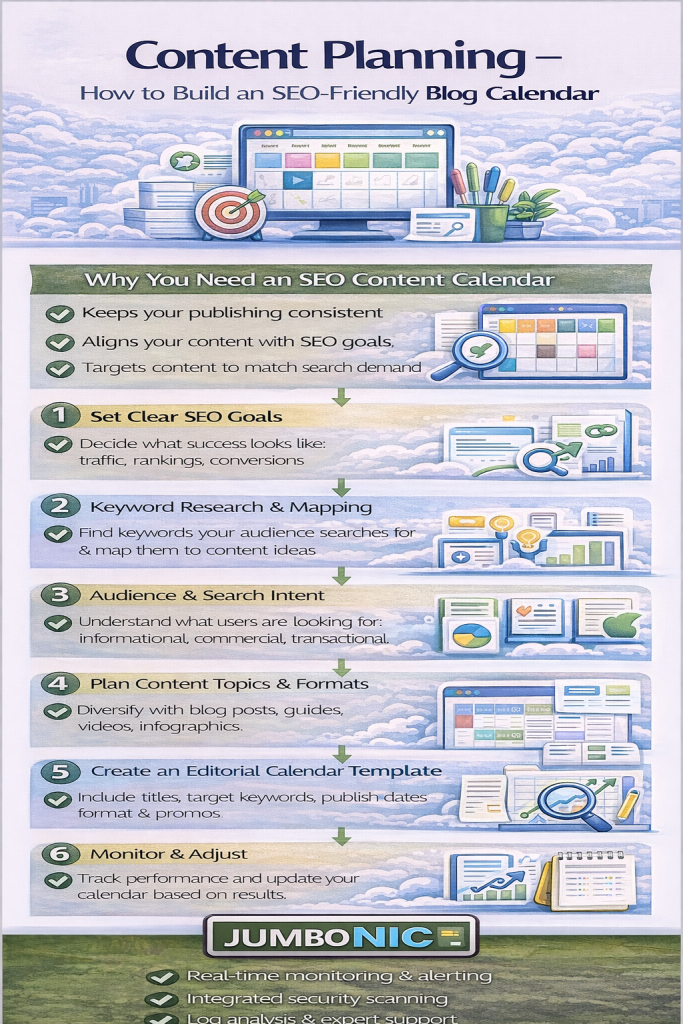
🧠 Why a Blog Calendar Matters for SEO
Consistency → Google rewards regular publishing
Strategic keyword targeting → Plan content around high-value search terms
Content diversity → Mix tutorials, guides, lists, and blog posts
Improved workflow → Easier collaboration and content tracking
A calendar keeps your content aligned with both audience needs and SEO goals.
🟦 Step 1: Brainstorm Blog Topics
Start by generating ideas:
Review keywords from research (Google Search Console, Ubersuggest, AnswerThePublic)
Check competitor blogs for gaps in content
Ask your audience via surveys or social media
Look at trending topics with Google Trends
Tip: JumboNIC hosting ensures your site can handle frequent posting without slowing down.
🟩 Step 2: Organize Topics by Keyword & Intent
For each blog idea, identify:
Primary keyword → Focus keyword to optimize for
Search intent → Informational, transactional, or navigational
Target audience → Who the content is for
Example:
| Blog Topic | Keyword | Intent | Audience |
|---|---|---|---|
| How to Choose Web Hosting | best web hosting 2025 | Informational | Small business owners |
| WordPress Speed Tips | WordPress speed optimization | Informational | Bloggers & website owners |
| Backups Made Simple | WordPress backups | Transactional | Website managers |
🟦 Step 3: Decide Posting Frequency
Beginners: 1–2 posts per week
Intermediate: 2–4 posts per week
Advanced: 5+ posts per week
Consistency is more important than volume. Regular publishing signals authority to Google.
🟩 Step 4: Set Deadlines and Assign Tasks
A blog calendar should include:
Draft deadline
Review & editing deadline
Publishing date
Promotion plan
Tools to use:
Google Sheets / Excel → Simple, free, shareable
Trello or Asana → For teams and workflow management
Tip: Hosting on JumboNIC allows you to schedule posts in WordPress without performance issues.
🟦 Step 5: Optimize Each Blog Post for SEO
Each post should include:
Keyword in title and meta description
Headings (H1, H2, H3) with keywords naturally
Internal and external links
Optimized images (compressed, alt tags)
Mobile-friendly layout (responsive theme)
JumboNIC hosting ensures your WordPress site loads fast and reliably, improving Core Web Vitals, which directly impact SEO.
🟩 Step 6: Plan Promotion & Monitoring
Share posts on social media, newsletters, and forums
Track performance in Google Analytics and Search Console
Identify which topics drive traffic and engagement
Adjust your calendar based on results
Analytics + consistent publishing = smarter content decisions.
🏆 Why JumboNIC Hosting Enhances Your Blog Calendar Strategy
| JumboNIC Feature | Benefit for Content Planning & SEO |
|---|---|
| Fast, optimized servers | Ensures every post loads quickly for visitors |
| High uptime | Blog posts are always accessible to users and search engines |
| WordPress-friendly hosting | Supports SEO plugins, scheduling, and media-heavy posts |
| Secure environment with SSL | Builds trust and improves rankings |
🎯 Quick Blog Calendar Checklist
✅ Brainstorm topics and match keywords
✅ Identify search intent and target audience
✅ Set posting frequency and deadlines
✅ Optimize posts for SEO
✅ Schedule publishing using WordPress
✅ Plan promotion and track performance
✅ Host on JumboNIC for speed, reliability, and scalability
🎉 Final Takeaway
An SEO-friendly blog calendar keeps your content organized, optimized, and consistent. Combined with JumboNIC hosting, your website is fast, secure, and always ready for new content — maximizing traffic, engagement, and rankings.
Planning + SEO + reliable hosting = content that consistently grows your audience.